

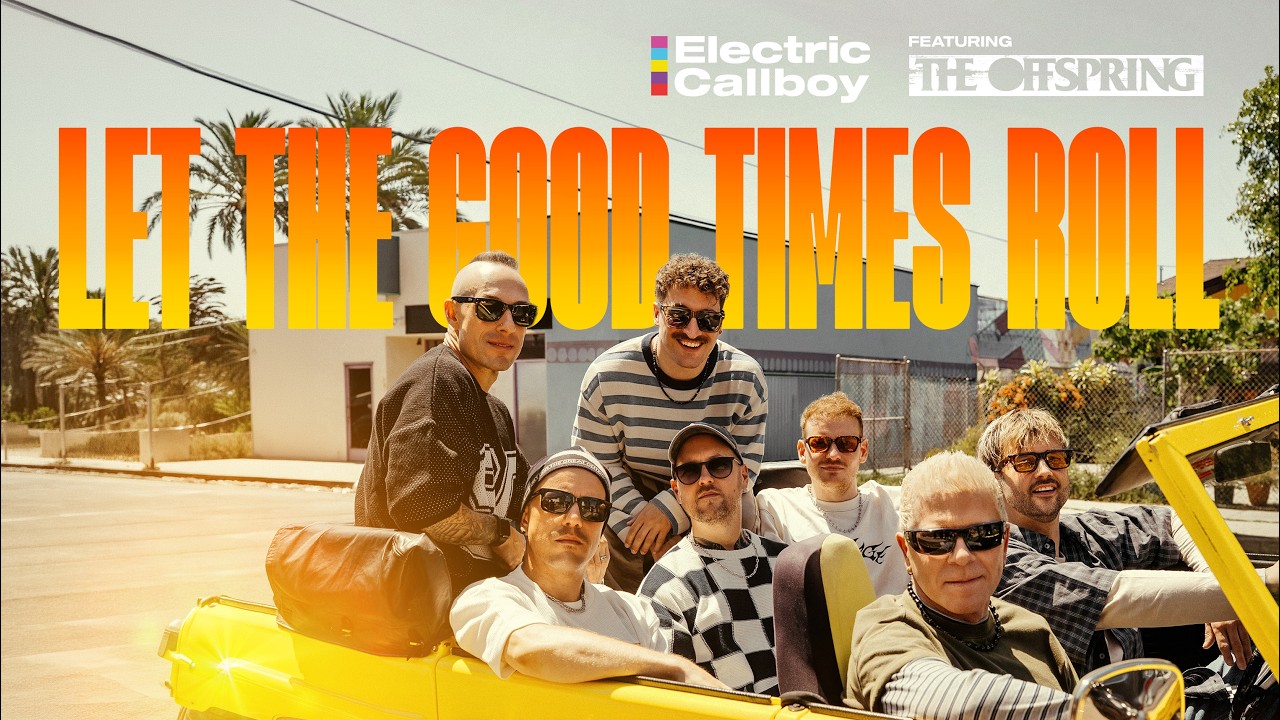
Electric Callboy and The Offspring just dropped “Let the Good Times Roll,” and the world finally got a reminder of what real punk‑hardcore sounds like. The opening synth stab hits like a cheap alarm clock in a dorm room, demanding attention. The Offspring’s Dexter Holland roars into the mic with a sneer that could cut glass. The rest of the band follows with a ferocity that makes most modern “scene” releases look like nursery rhymes. If you thought the genre had gone soft, sit down and listen.
Riff, Guitar, and Production
The main riff is a snarling, palm‑muted assault that would make any 90s skate‑park anthem blush. Kevin “Noodles” Wasserman cranks the distortion to the point where the strings sound like they’re being ripped from a broken amplifier. The riff repeats with surgical precision, each note landing like a punch to the gut. Production strips away any glossy sheen, leaving raw, gritty mids that slap the listener’s eardrums. The mix favors aggression over polish, and that’s exactly how punk should sound.
Layered under the riff, Jonah Perry Nimoy adds a thin, overdriven second guitar that chokes the space with harmonic tension. His keyboard work throws in a staccato synth line that punctuates the chorus like a warning siren. The keyboard is deliberately lo‑fi, a reminder that technology is a tool, not a crutch. The dual‑guitar attack creates a wall of sound that never collapses into monotony. Every layer pushes the track forward, refusing to let the listener breathe.
Pete Parada’s drumming is a relentless barrage of double‑kick thunder and snappy snare cracks. He locks in with Jonah’s congas and bongos, adding an oddball percussive texture that feels like a punk‑rock marching band. The percussion never dilutes the aggression; it amplifies it. The snare hits on the backbeat like a judge’s gavel, demanding obedience. The rhythm section drives the track at breakneck speed without sacrificing clarity.
Vocal Assault
Dexter Holland delivers his verses with a snarling sneer that could have been ripped from a 1994 demo tape. His vocal tone is gritty, unapologetic, and drenched in contempt for any hint of pop‑punk sentimentality. He snarls the chorus with a melodic hook that still manages to sound like a threat. The delivery never wavers, each syllable landing with the weight of a slammed door. Holland proves he still owns the mic like a weapon.
Jonah Perry Nimoy’s background vocals add a chaotic choir of snarls and shouts that fill the gaps between Holland’s lead lines. His vocal layering is deliberately messy, creating a wall of noise that mirrors the track’s instrumental chaos. The background chants echo the main hook, turning the chorus into a rallying cry for misfits. Nimoy’s contributions turn the song into a communal brawl rather than a solo performance. The result is a vocal storm that refuses to be tamed.
The lyrics flaunt a reckless celebration of excess, mocking anyone who pretends to be sober about life. Lines like “crank the amps, burn the night” read like a manifesto for the disenchanted. The song refuses to offer redemption; it revels in perpetual rebellion. Every word drips with contempt for conformity. The lyrical swagger matches the instrumental ferocity note for note.
Hardcore Meets Pop: The Bigger Picture
This track demolishes the myth that punk must be stripped down to acoustic basics. It embraces synths, extra percussion, and layered guitars while keeping the core aggression intact. The collaboration shows that genre purity is a myth sold to complacent fans. By merging Electric Callboy’s electronic edge with The Offspring’s classic punk grit, the song creates a new blueprint for hardcore. It forces the scene to evolve or die.
Compared to The Offspring’s early hits, “Let the Good Times Roll” feels heavier, faster, and more unapologetically loud. It outpaces “Self Esteem” in sheer velocity and outshouts “All I Want” in raw power. The track stands as a bridge between 90s skate‑punk and today’s hyper‑aggressive scene. It proves that the spirit of rebellion can be amplified without losing its bite. Any band that can’t match this intensity is simply background noise.
The final verdict is simple: this song is a middle‑finger to anyone who thinks punk has gone soft. It is a masterclass in controlled chaos, a perfect storm of riff, rhythm, and vocal fury. The production choices amplify the aggression instead of diluting it. If you crave a track that makes you feel alive, this is the anthem you need. Anything less is a polite apology.